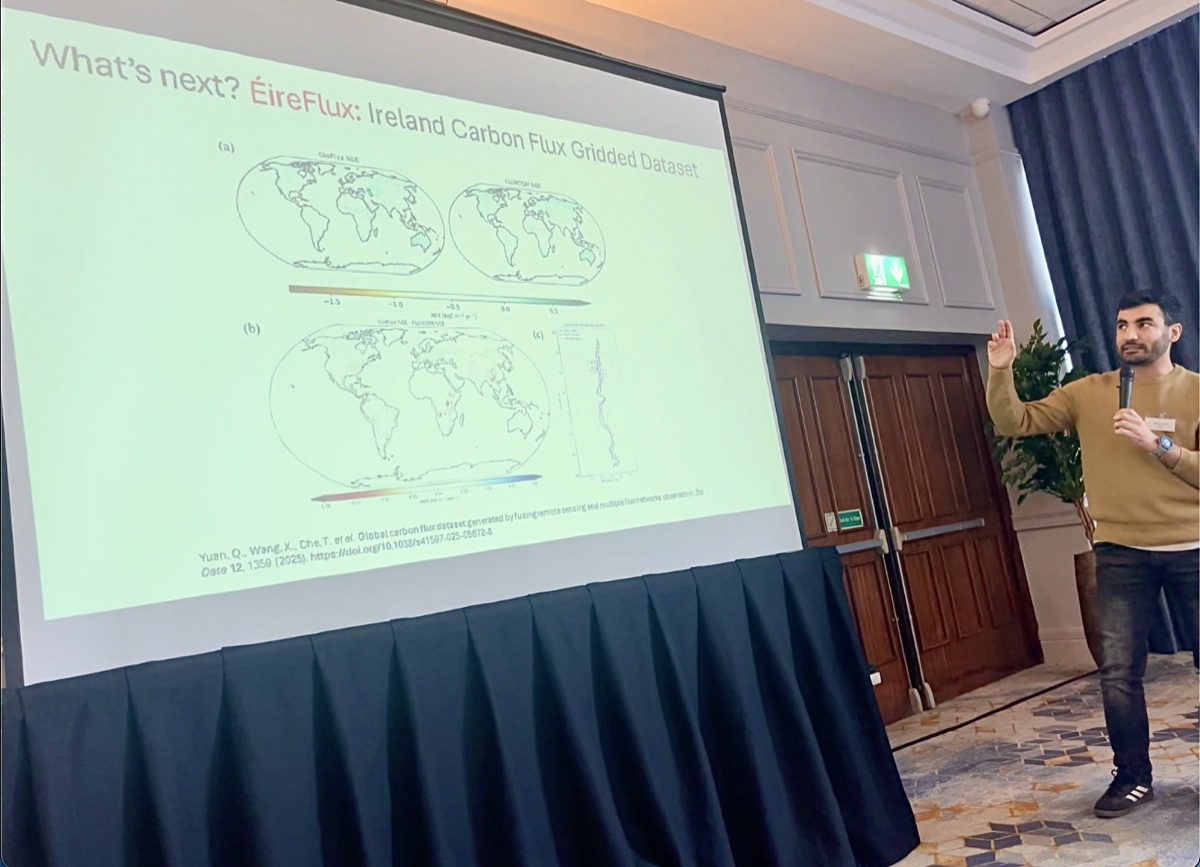
Dr. Wahaj Habib presents ICONEEx research at the ICOS Ireland Flux Tower Workshop
A lightning talk in the "Strengthening Collaboration" session in Malahide, alongside producers, users and network coordinators from Ireland's flux community.
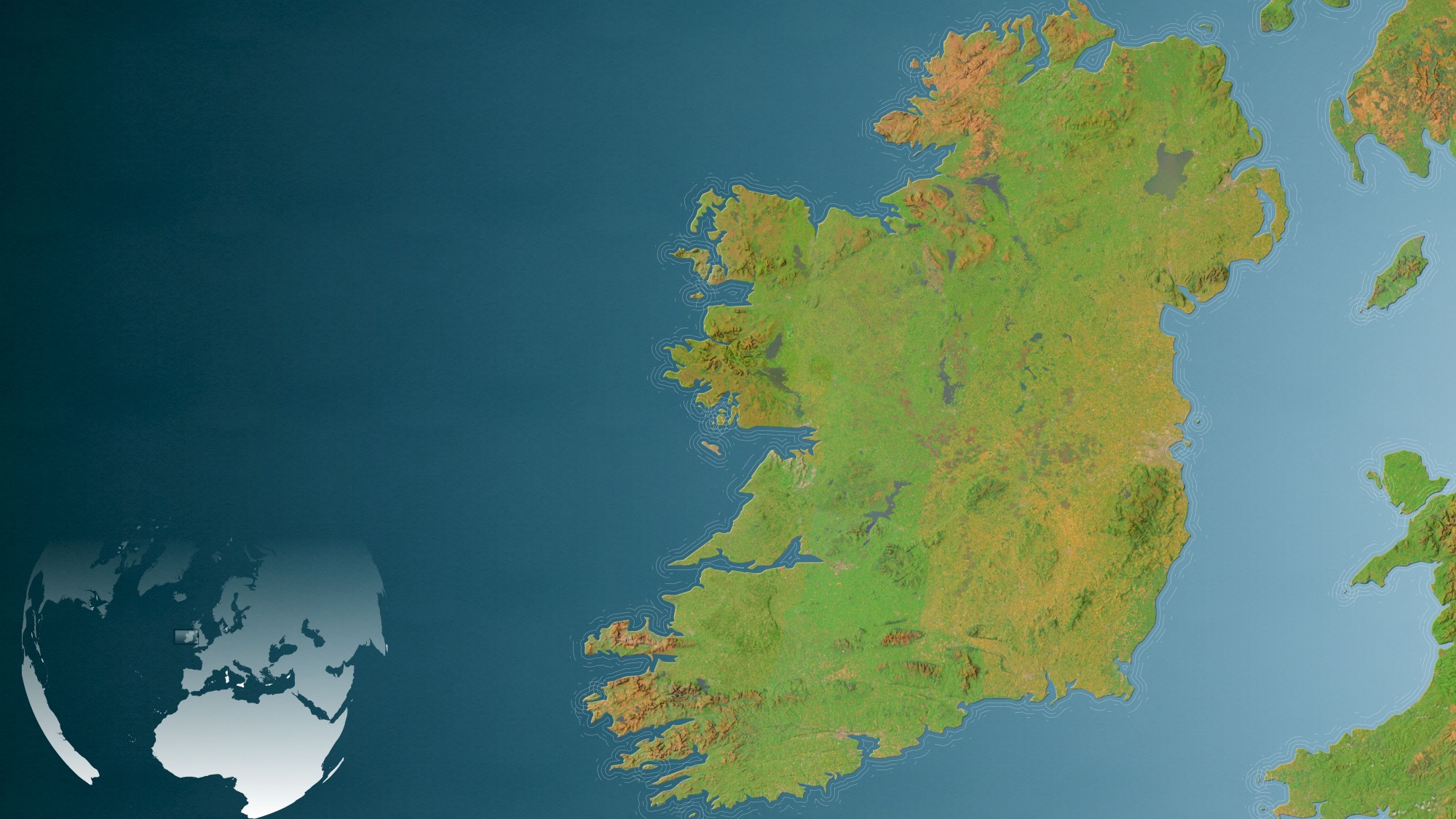
ICONEEx combines high-resolution Sentinel and MODIS data with eddy-covariance flux towers to model Net Ecosystem CO2 Exchange across ~92% of Ireland's land area, including wetlands, peatlands, grassland and forestry.
Flux towers measure carbon exchange precisely, but each one only sees about 1 km². Satellites let us extend those measurements to the whole country.
Climate change poses a significant environmental challenge for humanity, and accurately predicting its intensity, as well as its impact on terrestrial ecosystems, is crucial.
To achieve this, monitoring, modelling, and mapping greenhouse gas (GHG) exchanges between the biosphere and the atmosphere is essential. Monitoring is also important to achieve the European Union's goal to achieve a balance between GHG emissions and removals by 2050 and maintain negative emissions thereafter. While in situ measurement techniques, such as the eddy covariance flux tower (ECFT), have been used for decades to measure ecosystem-level exchanges of carbon, such as Net Ecosystem Exchange (NEE) of CO2, their footprint is limited to only 1 km2.
To overcome this limitation, satellite remote sensing data has been used to upscale these measurements to regional and global scales, but previous work has relied on low-resolution remote sensing data, such as the Moderate Resolution Imaging Spectroradiometer (MODIS) sensor (at 250m or 500m spatial resolution).
This study aims to use a combination of high-resolution remote sensing data and measurements from in situ ECFT data to model the NEE of CO2 across ~92% of Ireland's terrestrial area, covering major land covers such as wetlands (coastal and peatlands), grassland, and forestry. The model will integrate datasets from both ESA (Copernicus Sentinel-1 and 2) and NASA (MODIS PAR) with the light response curve parameters derived from the ECFT data in Ireland, to model NEE CO2 at a national scale.
The results will be useful for monitoring, reporting, and verifying NEE across a range of ecosystems in Ireland. They can also be used to enhance National Inventory Reporting and national ambitions on climate, influence targeted policymaking, and verify land management decisions.
Conferences, publications and project milestones.
A lightning talk in the "Strengthening Collaboration" session in Malahide, alongside producers, users and network coordinators from Ireland's flux community.
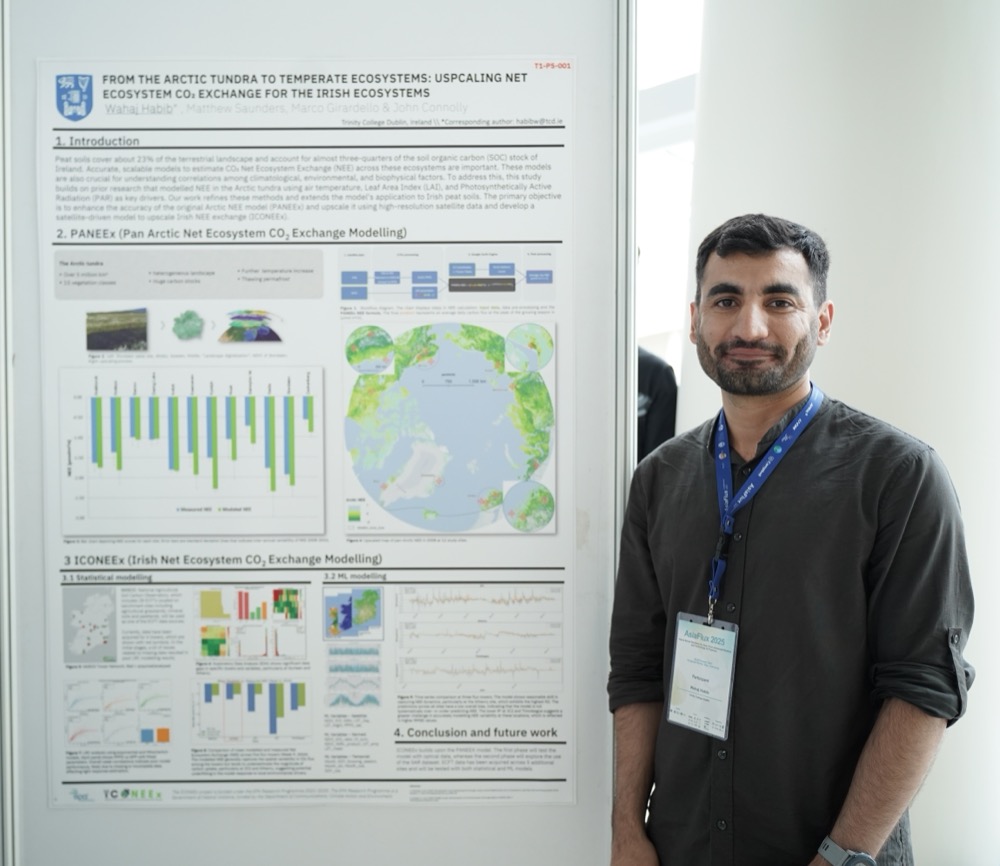
A poster on upscaling Net Ecosystem CO₂ Exchange for Irish ecosystems, presented in Pangkalan Kerinci, Indonesia.
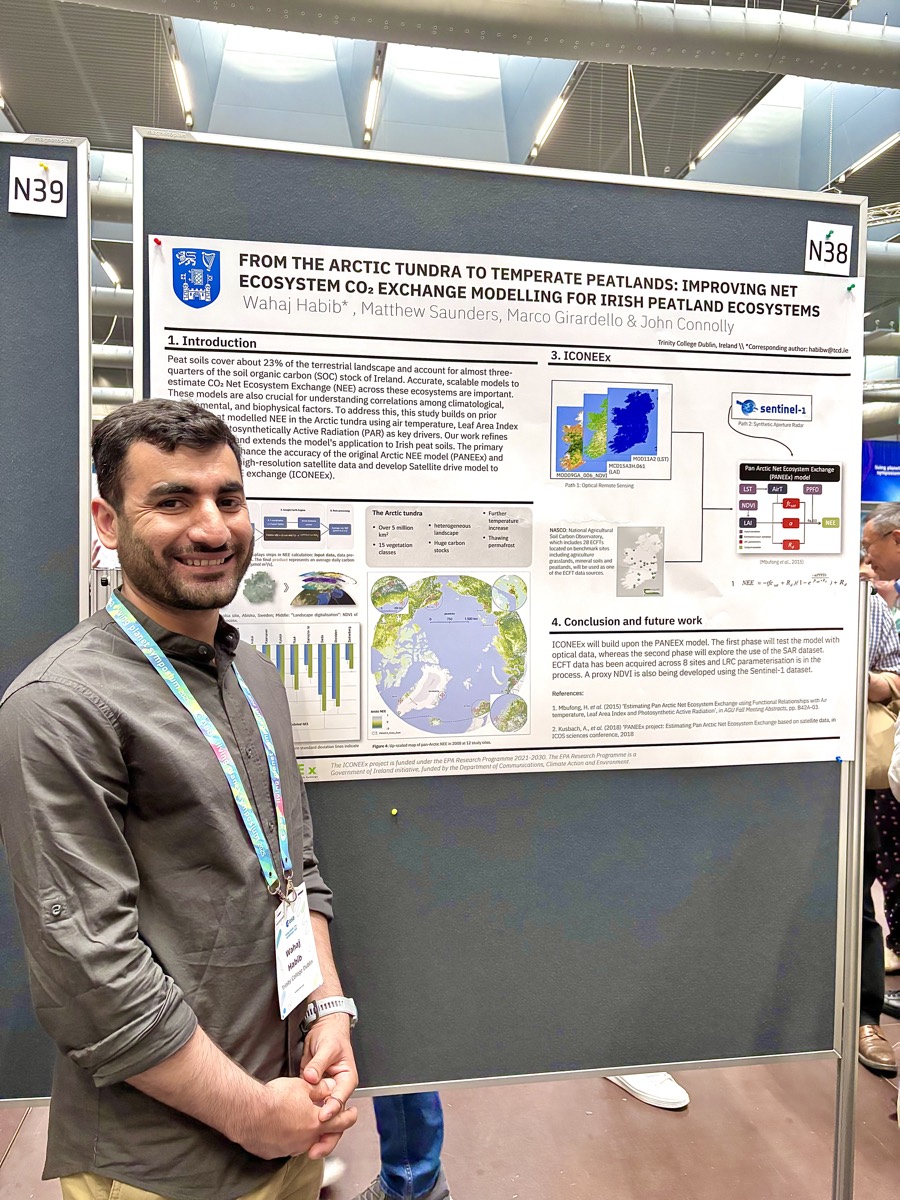
A poster at ESA's flagship Earth observation conference in Vienna.
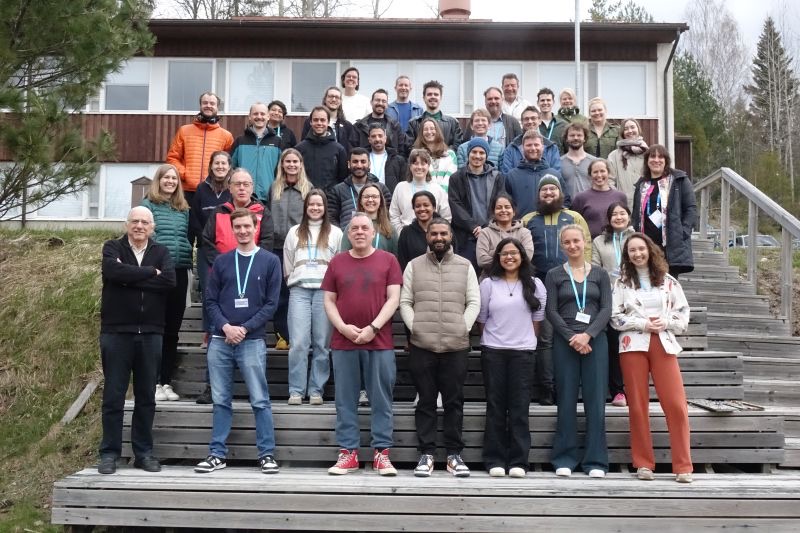
Ten days at Hyytiälä Forest Station, Finland, with 35 students learning carbon cycle measurement for ICOS.
Access to NASCO eddy-covariance flux tower data from 28 towers across Irish agricultural landscapes.
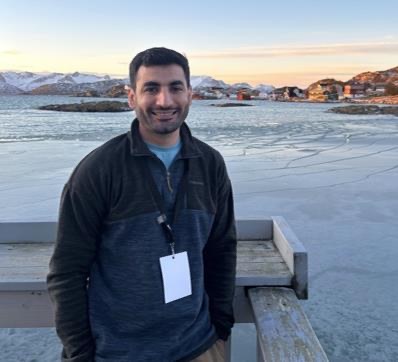
Selected from about 200 applicants worldwide, with funding from the Embassy of Ireland in Norway and the Marine Institute.
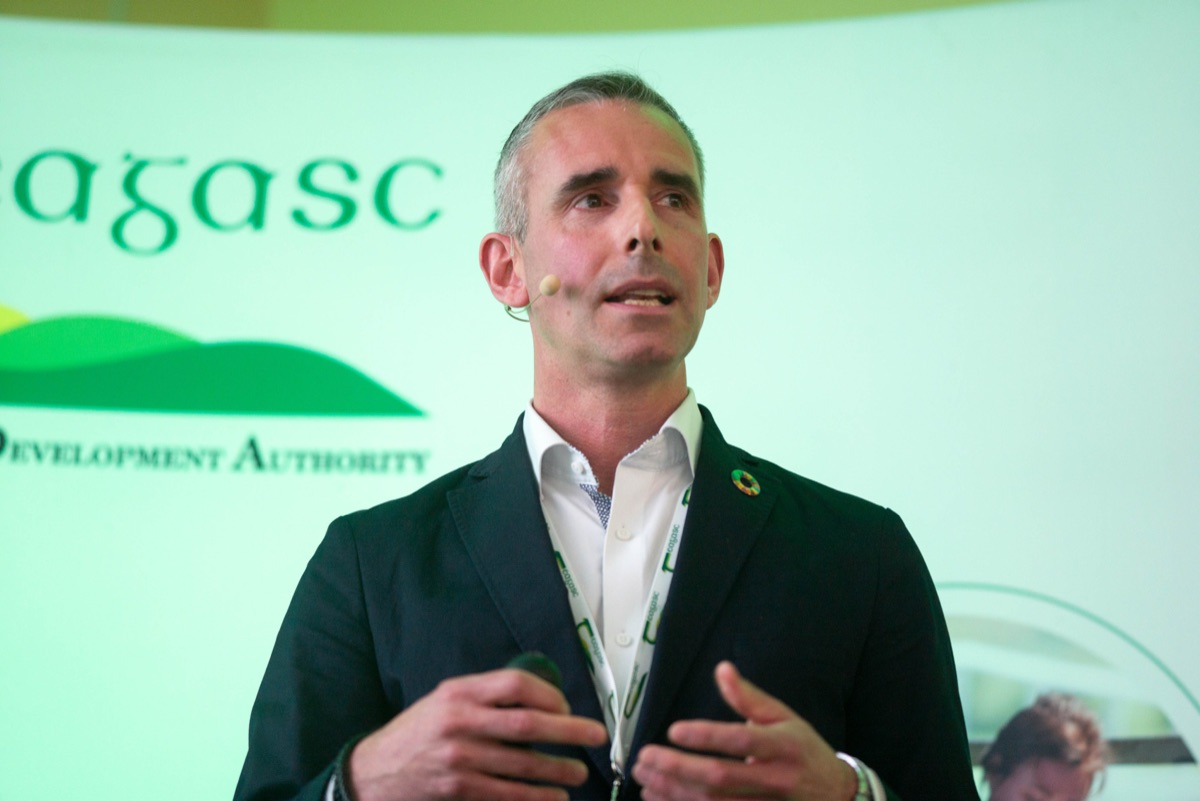
Saunders, Connolly and Habib on counting carbon in agricultural peat soils.
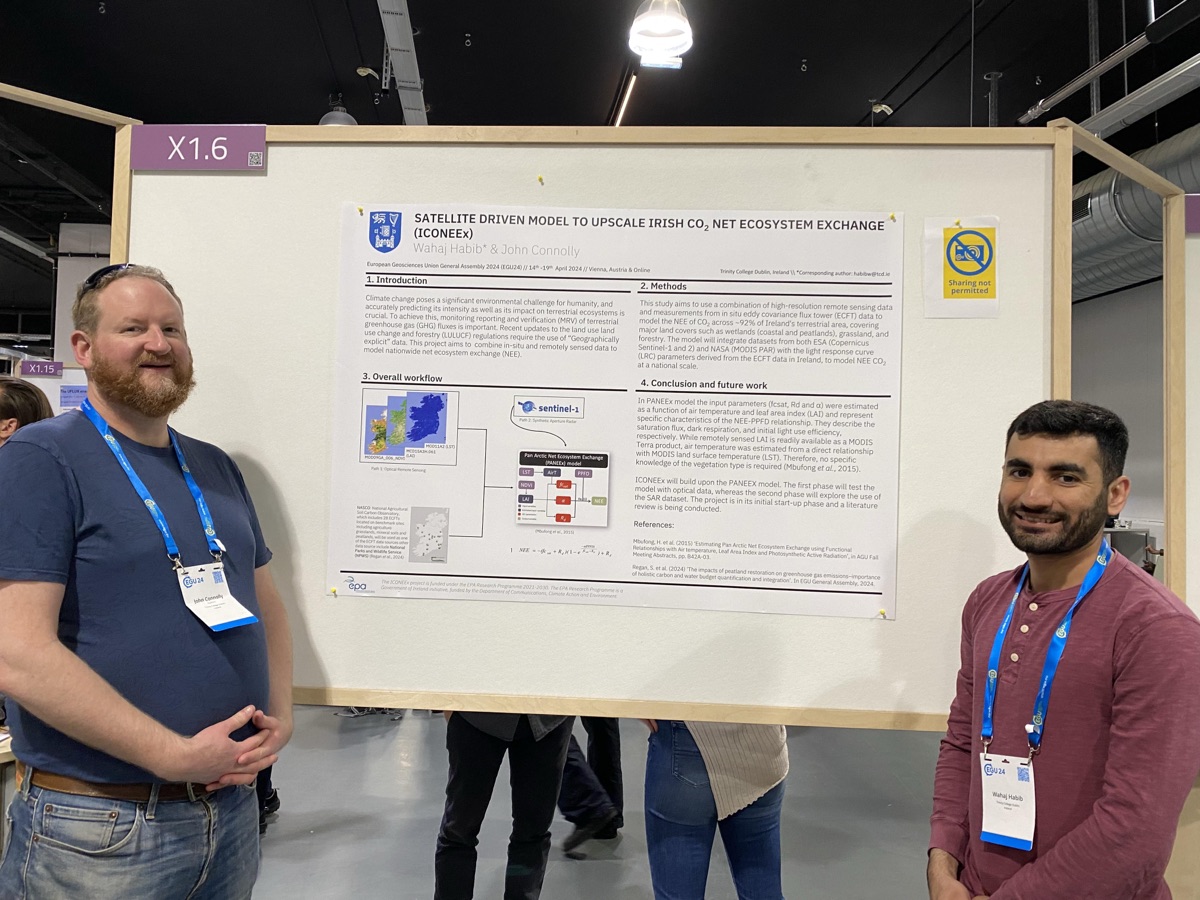
Connolly and Habib presented the ICONEEx project at the European Geosciences Union General Assembly in Vienna.
Launch of the satellite-driven model to upscale Irish CO₂ Net Ecosystem Exchange.
We work closely with Ireland's eddy-covariance flux tower community, with collaborators at leading academic and research institutions.





Read our publications and presentations, or get in touch with the team.